


Toilet Seat Durability: Analyzing Smart Seat Rotation Limits

High-traffic commercial restrooms present a harsh operational environment: frequent equipment failure inevitably leads to spiked maintenance labor and volatile replacement costs. For facility managers procuring automatic sensor toilet seats, surface-level design specifications offer minimal value without verified mechanical endurance metrics. This technical brief examines direct factory stress-test results-specifically focusing on motor cycle limits and film cutter longevity-providing the baseline data required to calculate your facility's Total Cost of Ownership (TCO).
Engineering Metrics for High-Volume Environments
Commercial real estate hubs, airports, and hospitals demand a standard of mechanical resilience far exceeding residential equivalents. When evaluating toilet seat durability, procurement teams must analyze the exact rotational thresholds of the primary drive mechanisms. Frequent paper jams and manual cover dispenser failures drive up janitorial hours; transitioning to an automated system only yields positive ROI if the internal components can withstand continuous, high-torque actuation.
Our internal testing protocols simulate extreme usage environments to determine exact failure points, ensuring that bulk wholesale orders meet rigid public health and safety mandates.
Motor Lifespan and Rotation Cycle Data

The core of any automatic sanitary cover system is its drive motor. To establish a baseline for longevity, our engineering team subjects production units to continuous cycle testing under varied load weights and humidity levels.
Baseline Endurance: Standard commercial units are engineered to exceed a 10,000+ times usage lifespan without experiencing thermal overload or torque degradation.
Component Specification: We utilize sealed, brushless DC motors operating at low voltage (6V/12V). This specific configuration reduces electrical wear on the stator and mitigates moisture ingress risks inherent to public washrooms.
Labor Impact: Implementing units with verified high-cycle limits directly reduces maintenance labor by 40%, as cleaning staff eliminate the daily task of unblocking paper-clogged plumbing and restocking manual paper seat cover dispensers.
Component Breakdown: The Film Cutter Mechanism
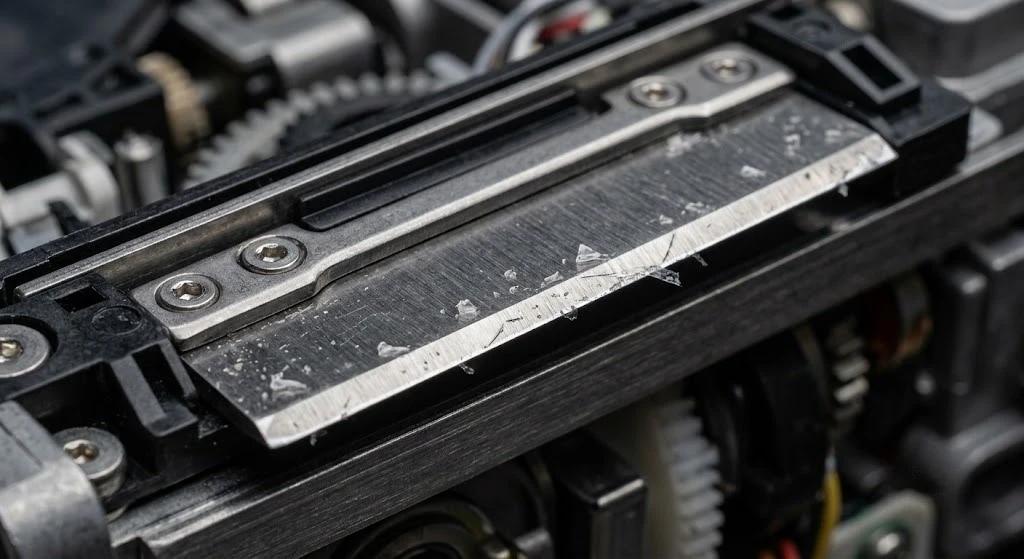
The secondary failure point in automated hygiene systems is the cutting mechanism responsible for severing the used sanitary film. If the blade dulls, the system jams, immediately neutralizing the hardware's operational value.
To counter this, our factory employs self-sharpening tungsten steel blades integrated directly into the housing track. Stress tests indicate that these blades maintain clean shear force even after processing hundreds of heavy-gauge sanitary film rolls wholesale volume equivalents. The precise timing of the motor rotation synchronizes with the blade drop, ensuring minimal mechanical friction and eliminating material drag.
Cost and Durability Comparison
To quantify the financial impact of hardware endurance, the following table models the operational metrics of traditional hygiene methods versus high-durability automated systems over a 12-month cycle in a 50-stall commercial facility.
|
Metric / Hygiene Solution |
Traditional Paper Seat Covers |
Automated Smart Seat Systems |
|
Primary Material Cost |
High (High waste, theft, double-usage) |
Controlled (Exact single-use rotation) |
|
Component Durability |
Low (Plastic dispensers break frequently) |
High (Tested to 10,000+ times usage lifespan) |
|
Maintenance Frequency |
3-4 times daily (Restocking/Cleaning) |
1 time weekly (Film replacement) |
|
Plumbing Blockage Risk |
High (Paper flushing) |
Zero (Used film is spooled and disposed) |
|
Hardware Certification |
N/A |
CE, RoHS, ISO 9001 |
As a primary manufacturer, our production lines integrate strict quality control checkpoints before any pallet is cleared for export. We provide full transparency regarding our patents and CE/RoHS certificates, ensuring global distribution partners meet local building codes and municipal health regulations.
Whether you require standardized inventory or need specific voltage modifications, our R&D department executes OEM customization within 15 days to align with regional project requirements.
FAQ
Q: How does extreme humidity in commercial restrooms affect smart toilet seat motor lifespan?
A: Commercial units utilize sealed, IPX4-rated brushless motors. This internal isolation prevents moisture ingress and corrosion, ensuring the drive mechanism maintains its maximum rotation rating even in non-ventilated, high-humidity environments such as gym locker rooms and underground transit stations.
Q: What is the failure rate of the sanitary film cutter blade during continuous heavy usage?
A: Factory continuous-stress tests register a blade failure rate of less than 0.1% over 10,000 cuts. The integrated tungsten steel blades operate on a self-sharpening friction track, requiring zero physical maintenance throughout the primary lifecycle of the dispenser mechanism.
Q: Can facility managers request custom voltage and rotation specifications for OEM wholesale orders?
A: Yes. Direct manufacturers can configure motor voltage parameters (e.g., hardwired 12V DC vs. battery-operated 6V) and rotation timing limits. Custom prototypes engineered to meet specific regional compliance standards or architectural specifications are typically dispatched within 15 working days.
Contact now for a quote
Struggling with escalating maintenance overhead and frequent equipment failure in your commercial restrooms? Reach out to our engineering team for a customized Total Cost of Ownership (TCO) analysis, review our full stress-test documentation, and request a functional sample of our automated sensor toilet seat systems today.


