Commercial Smart Toilet Seat Distributor Guide: Profit Margins, Market Demand, and OEM Support
Commercial washroom infrastructure is shifting rapidly. Facility directors at airports, healthcare networks, and Grade-A office buildings face chronic maintenance bottlenecks: paper waste buildup, clogged plumbing, and labor-intensive manual sanitation cycles. Standard paper seat covers exacerbate these operational expenses (OpEx) while failing to deliver verified hygiene standards.
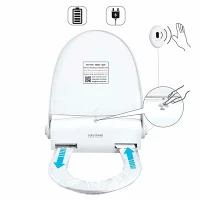
Automatic sanitary toilet seat systems-utilizing single-use recyclable film rolls replaced seamlessly via infrared sensor-eliminate paper-induced plumbing blockages while creating a recurring revenue model for regional equipment suppliers. For B2B plumbing wholesalers, building automation distributors, and commercial hygiene vendors, adding this technology directly targets high-volume commercial pain points.
Partnering directly with a specialized factory delivers clear commercial advantages. This analysis details market demand drivers, distributor margin structures, technical specifications, and manufacturer support programs for prospective regional partners.
Commercial Market Dynamics & Facility Pain Points
Commercial real estate operators prioritize Total Cost of Ownership (TCO) over initial capital expenditure. Traditional public and commercial washrooms incur high recurring maintenance costs driven primarily by two factors: plumbing service calls caused by paper seat covers flushed down high-efficiency toilets, and constant janitorial intervention.
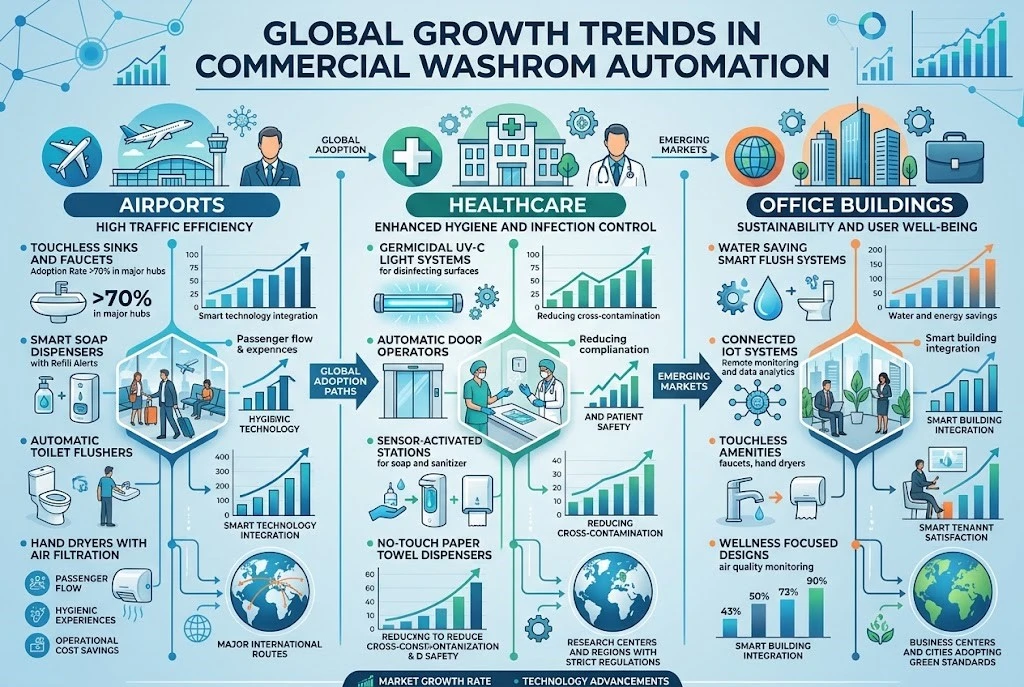
COMMERCIAL WASHROOM COST DRIVERS
Traditional Setup:
[Paper Covers] -> [Plumbing Clogs] -> [Emergency Service Calls]-> [Manual Cleaning] -> [High Labor Hours] -> [Elevated Janitorial Costs]
Automatic Film System Setup:
[Sanitary Film]-> [Zero Clogs]-> [Predictable Consumable Revenue] -> [Automated Roll] -> [-40% Labor Hours] -> [Optimized Facility OpEx]
Adopting sensor-operated sanitary seat covers removes paper waste from the plumbing ecosystem entirely. Field data across commercial installations reveals measurable operational improvements:
Plumbing Service Call Reduction
Eliminating flushable paper covers reduces mainline washroom drainage blockages by up to 85%.
Labor Efficiency Gains
Janitorial teams spend up to 40% less time clearing trash bins, restocking paper dispensers, and manually wiping down seat surfaces.
Material Consumption Control
High-density polyethylene (HDPE) film rolls provide a fixed number of uses per roll (typically 60–130 uses per roll depending on model configuration), preventing excess material waste common with loose paper sheets.
Distributors positioning these solutions address direct financial metrics for facility managers rather than selling superficial aesthetic upgrades.
Distributor Margin Analysis & Revenue Architecture
Distributing commercial sanitary hardware differs fundamentally from traditional plumbing fixtures. Traditional fixtures generate a single hardware sale with zero ongoing customer lifetime value (LTV). Conversely, becoming a smart toilet seat distributor opens two distinct revenue streams: initial hardware placement margins and high-margin, recurring consumable sales.
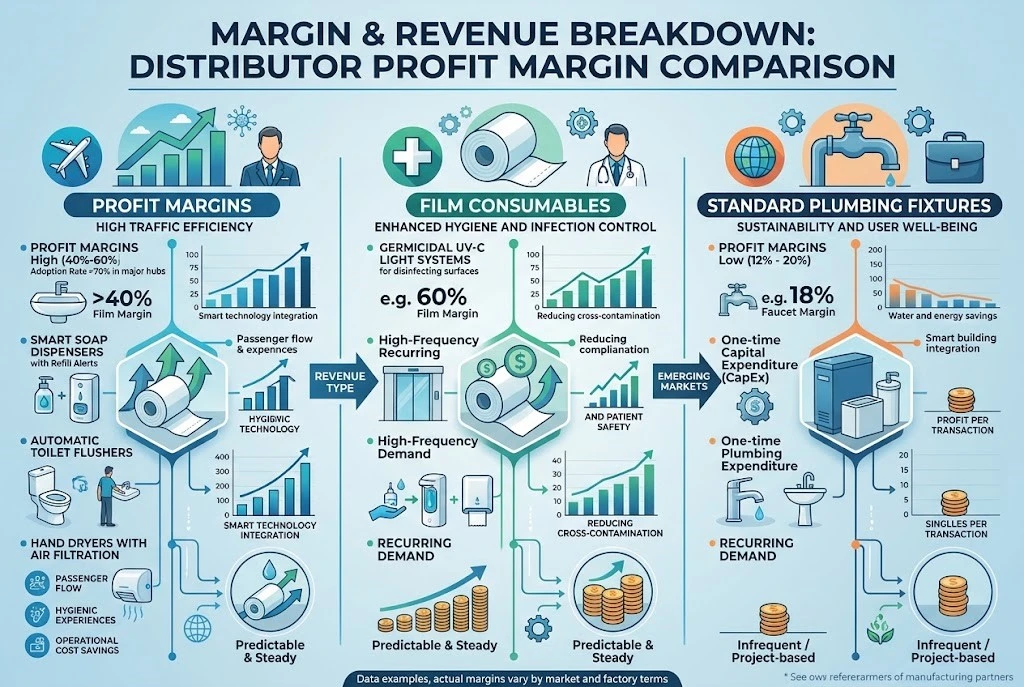
Hardware vs. Consumable Profit Breakdown
| Financial Metric | Standard Commercial Fixtures | Automatic Sanitary Toilet Seat System | Sanitary Film Roll Consumables |
| Gross Profit Margin | 12% – 18% | 35% – 50% | 40% – 60% |
| Revenue Type | One-time CapEx | Initial CapEx | Monthly/Quarterly Recurring OpEx |
| Customer Retention | Low (Project-based) | High (Tied to consumable supply) | High (92%+ annualized retention) |
| Maintenance Drag | High warranty calls | Low (Modular component swap) | None |
Long-Term Unit Economics
When a distributor places 500 automatic seat units across a commercial office complex or hospital facility
Upfront Hardware Revenue
Immediate margin captured on the base units during facility fit-out or retrofitting.
Consumable Reorder Volume
An average facility utilizing 500 units generates demand for thousands of replacement HDPE film rolls annually.
Consumable Lock-In
Film roll dimensions and drive mechanisms are proprietary to the seat architecture, ensuring client accounts remain tied directly to your distribution network for ongoing supplies.
Engineering Standards, OEM Customization, and Manufacturing Scale
B2B buyers require reliable hardware built for high-traffic environments. Product failures lead to immediate distributor reputation loss. Partnering directly with an established factory ensures access to heavy-duty engineering built specifically for public infrastructure.
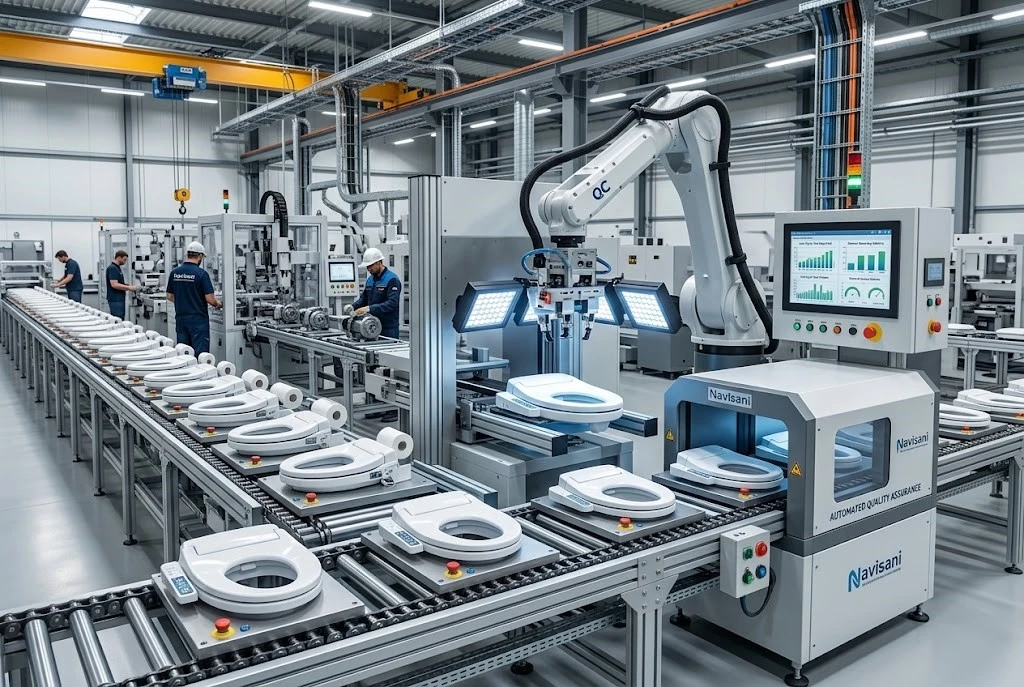
OEM / ODM MANUFACTURING MATRIX
Casing Customization
--> ABS Fire-Retardant Resin / Custom RAL Colors
Power Configurations
--> Dual Power: Rechargeable Battery or AC Adapter
Branding & Packaging
--> Silk-Screen Logo, Customized Master Cartons
Compliance Certifications
--> CE, RoHS, ISO9001 Factory Quality Control
Factory Technical Capabilities
Lifespan Testing
Internal drive mechanisms and stainless-steel micro-switches undergo continuous load testing exceeding 100,000 operation cycles to withstand continuous commercial use.
Power Versatility
Units accommodate both direct AC power connections (for new commercial construction) and high-capacity lithium/lead-acid rechargeable battery packs (yielding 3,000+ operations per charge for retrofits lacking wall outlets).
Sensor Precision
Infrared non-touch sensors prevent cross-contamination while featuring smart-delay logic to prevent continuous material wasting from accidental triggers.
For large-scale tenders, distributors require custom branding and structural adjustments. Working with a dedicated OEM factory allows for custom color matching, private-label silk-screening, custom packaging, and flexible production scheduling with complete engineering sample turnaround within 15 days. Interested distributors can explore custom OEM manufacturing capabilities to review exact factory tolerances and production limits.
FAQ
Q: What is the average lead time for wholesale OEM orders?
A: Standard OEM factory production cycles average 15 to 20 business days following technical specification approval. Sample units for commercial tender evaluation ship within 3 to 5 business days via express freight.
Q: How do rechargeable battery options perform in high-traffic settings?
A: High-capacity rechargeable batteries deliver between 3,000 and 4,500 operation cycles per full charge. Facilities without accessible wall outlets typically implement a simple dual-pack rotation during routine janitorial maintenance.
Q: Are the HDPE sanitary film rolls recyclable under standard municipal guidelines?
A: Yes. The sanitary film rolls use high-density polyethylene (HDPE #2), which is 100% recyclable. Facilities consolidate used rolls into standard plastic recycling streams alongside clean commercial waste.
Q: How do automatic toilet seats fit existing commercial bowl profiles?
A: Units feature adjustable mounting fasteners (ranging from 130mm to 200mm mounting hole centers), making them compatible with over 95% of standard commercial elongated and round toilet bowl configurations globally.
Request Partner Pricing & Sample Kits
Expanding your commercial product portfolio requires reliable factory backing, transparent pricing, and robust hardware built for public facility demands. If you manage commercial supply accounts, building system distribution, or wholesale plumbing lines, partner directly with a proven manufacturer.
Contact our business development team today to analyze territory availability, review tiered wholesale pricing, and request wholesale sample kits and distributor pricing for your technical team's evaluation.