


Intelligent toilet seats have played a significant role in promoting public restroom hygiene, mainly through the following functions:
1, Automatic cleaning and deodorization
Automatic cleaning function: Smart toilet seats are usually equipped with an automatic cleaning system that can effectively remove dirt and bacteria by using a nozzle and high-pressure water flow to clean the seat, spout, and other parts of the toilet, maintaining the cleanliness and hygiene of the toilet.
Automatic deodorization function: The built-in deodorization device can continuously purify the air in the bathroom, effectively remove odors, and create a fresh toilet environment for users. This function is particularly important in public restrooms, as it can reduce the inconvenience caused by odors to others.
2, Seat ring sterilization and antibacterial
Seat sterilization: Some smart toilet seats use ultraviolet sterilization technology or other advanced sterilization methods to sterilize the seat, effectively reducing bacterial growth. This is of great significance for preventing cross infection and ensuring public health.
Antibacterial material: Some smart toilet seats are made of antibacterial materials, such as silver ion antibacterial material, which can inhibit bacterial growth, reduce bacterial adhesion and reproduction on the seat.
3, Intelligent sensing and convenient operation
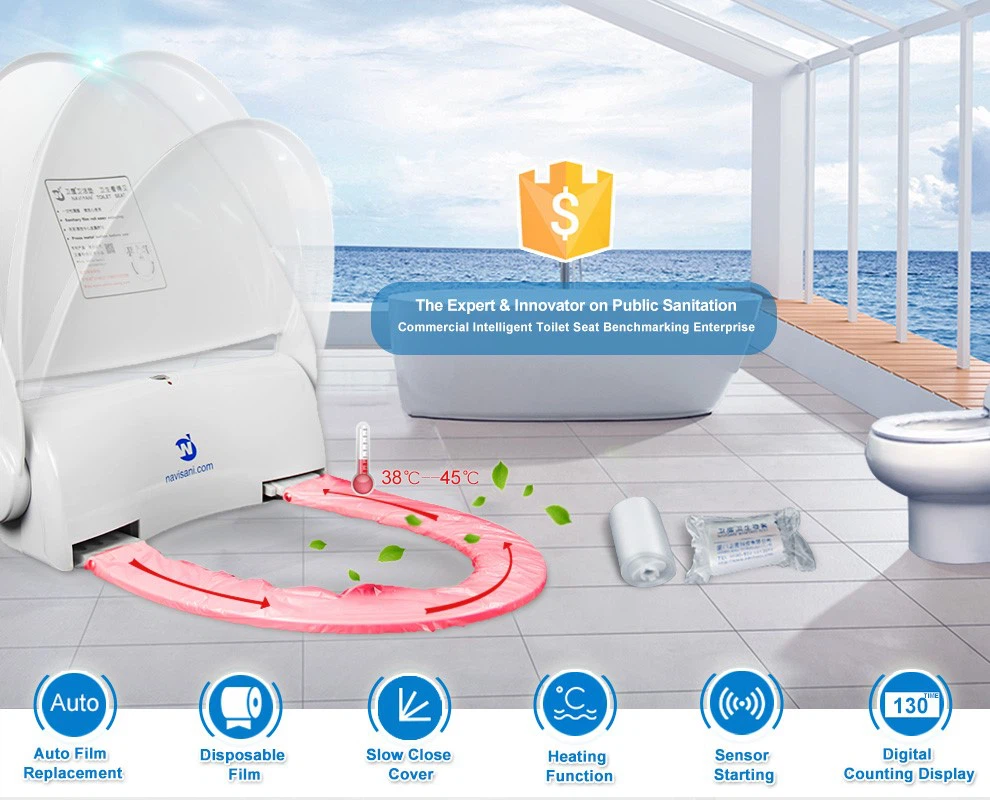
Automatic sensing: The smart toilet seat can automatically detect the user's arrival through built-in sensors, and automatically open the lid or perform other operations, reducing direct contact between hands and the toilet and lowering the risk of cross infection.
Convenient operation: Smart toilet seats are usually equipped with remote control or voice control functions, making it easy for users to operate. In public restrooms, these features can improve usage efficiency, reduce waiting time, and also help maintain the cleanliness of the bathroom.
4, Water conservation and environmental protection
Water saving technology: The intelligent toilet seat adopts advanced water-saving technology, which can reduce water consumption. In public restrooms, water-saving functions not only help to save resources, but also reduce water stains and slippery conditions, reducing the risk of accidents.
Environmentally friendly materials: Some smart toilet seats are made of environmentally friendly materials that meet environmental requirements. These materials will not cause pollution to the environment during use and help protect the ecological environment of public restrooms.
In summary, smart toilet seats effectively promote the hygiene of public restrooms through various functions such as automatic cleaning and deodorization, seat sterilization and antibacterial, intelligent sensing and convenient operation, as well as water conservation and environmental protection. These features not only improve the user's toilet experience, but also reduce the risk of cross infection, providing strong support for the hygiene management of public restrooms.


